Monday, July 29, 2019

What If It's True?: Charles Martin teaches from Capernaum

So, earlier this year, author Charles Martin of What if It's True?:A storyteller's journey with Jesus, travelled to Israel with his church for a Bible tour. While there, he taught at several locations. These teachings were filmed, and he shared the links with his fans in a newsletter.

Which basically means I get to hear my favorite author teach from my favorite place in the world—no big deal.

Anyway, one of the places he taught was in Capernaum, and it was here that he read aloud the story he'd written about the tassels/hem of garments, David in En Gedi, and the woman with the issue of blood.

So, please go buy this book! But, here's where you can hear it read aloud—in the very place it happened 2000 years ago.


Click here or on the image above, and then select the video titled "Capernaum" in the 2nd row.

Enjoy!

Monday, July 22, 2019

What if it's True?: Combatting Resignation

In Chapter 5 "Talk to the Hand—Jesus Christ is Lord of All" of What if it's True?: A Storyteller's Journey with Jesus, author Charles Martin discusses the cancer of resignation and why it is so important to put all of our trust in God.

He points out, that in Caesarea Philippi, Peter's confession of "You are the Messiah" in Matthew 16 came six days before the revelation that Jesus was in fact, the Messiah.


"At its root," Martin says, "Resignation spins a lie that says our enemy is stronger than our King. Period.... [But], truth is, our hardship does not determine HIs character or HIs love for us, and it doesn't make Him any less King or any less capable or any less good or any less in love with us. The choice is ours. We get to choose whether to fix our eyes on the giants—or the King on the throne" (pages 63-64).

On page 66, he says, "Our enemy can take you and me from warrior to wuss through our agreement with resignation". The way to fight back through the word of God. "Counter every lie with 2 promises of God. Make bookends".

Pretty great advice! And actually, you can hear him teach on this yourself. Click here or on the photo above, because while in Israel earlier this year, Martin taught on this very topic and chapter from its setting: Caesarea Philippi. And while listening to his message, you can hear the calming waters of Banias Springs, the headwaters of the Jordan River... and watch a lot of tourists walk by and take selfies, haha.

Choose the video that says "Caesarea Philippi" to get the right one.


Monday, July 15, 2019

What if It's True?: The Shelter of His Wings

As I said in the last post, I love pretty much everything Charles Martin writes. But he mostly writes fiction, so when he published a nonfiction book this year, I was curious. What if it's True? didn't disappoint!


In chapter 2, "We're all bleeders", he explores the concept of the tassels on the hems of garments, which reminded me of this post I wrote last year from Ann Spangler and Lois Tverberg's book, Sitting at the Feet of Rabbi Jesus

They basically explore the concept of tassels on the hem of the garments of Jewish men, especially in ancient Israel, and gave me a perspective how specific stories from the Bible that I'd never thought of before: David cutting the hem off Saul's robe and the woman with the issue of blood touching Jesus' hem. 

So, when I saw that Martin wrote a chapter that also talked about this concept and these stories, I wanted to share it here.

What I love is that Martin expands on the concepts I learned from Spangler and Tverberg's book. While they spoke about the hem showing authority, power, and holiness, he talks about its protection. Martin talks about the word "wings" used in the Old Testament to show God's protection of the Israelites, threading it from Exodus, Numbers, Deuteronomy, 1 Samuel, Psalms, Malachi... and all the way to Matthew.

The meaning of "wings" in the passages he cites have to do with cover, refuge, deliverance, and trust" (page 21). He points out that when God commands in Numbers for the Israelites to put tassels on their garments, it was because "God is practical and He doesn't want His people to forget" (page 21) and later on this page shows that the corner/border of a garment is the same word used for wings in these passages. "God was making a mental connection for His people. In a sense, He was saying, 'The corner of your garment should remind you of Me and My protection—of My deliverance and your healing" (pages 21-22).

As with the story of David cutting off the tassel of Saul's robe, Martin points out, "That tassel represented God's covering and protection. God had given Saul into David's hand. And when David held it up and showed it to Saul, and Saul glanced down at his now three-winged shirt, Saul knew it. He understood" (page 22).

As for the woman with the issue of blood:

"This woman believed the Word was more true than her circumstances" (page 27).

WOW. Read that about 50 times more, please. I know I need to.

It wasn't just her though. Martin points out in Matthew 14:35-36: "And when the men of that place recognized Him, they sent out into all that surrounding region, brought to Him all who were sick, and begged Him that they might only touch the hem of His garment. And as many as touched it were made perfectly well."

What about us? As Martin states: "The wings of His garment are here. Now. Will you reach out and grab hold?" (page 27)

So now, we've seen a connection of this physical picture of God's authority, power, holiness, and protection. How does this continuation of this theme deepen our understanding of this practice and God's Word?


Monday, July 8, 2019

What if it's True?

This year, my favorite author of all time, Charles Martin, published a book called, What if it's True?: A Storyteller's Journey with Jesus.

While Martin normally writes fiction, this book was completely true to his voice, which is nothing less than raw, powerful poetry in prose form. If you've never read his books, you need to. Don't even get me started on how amazing they are. 

Especially When Crickets Cry

Especially Wrapped in Rain

Especially A Life Intercepted

Especially Water from my Heart

Especially... but I digress.

In What if it's True? Martin takes the reader straight into the days when Jesus Himself walked on the Earth. It's not a fictional account, or a re-telling either. Each chapter focuses on a different story, with different characters interacting with Jesus. Martin steps into the story, with the reader, until they are both right in the middle of the action. 

Then he pulls away and connects the story to real life 2019 years later, tugging the reader back to the modern day.

Except that, having looked into the eyes of Jesus in each of these stories, the readers can't look away. Martin threads, hammers, and chisels his points straight into the heart, leaving the reader nowhere to go except to Scripture, prayer, and time with the Lord. And in light of that, he closes every chapter with a prayer, inviting the reader to sit once again at the feet of Jesus.

He basically is asking the question, "What if everything Jesus said and did was true, what would it mean for our lives today?"

I can't recommend this book highly enough... or this author. Please check it out!

Monday, July 1, 2019

How to read the Filament Bible: See

This is part 4 in a series on the Filament Bible and its corresponding app.

After studying your selected Scripture and reflection on the resources around it, it's time to have fun with some interactive videos from the Bible Project, along with different charts, maps, drawings, and graphs.

I love this section, as well, and have often found myself pausing the videos so I can take notes.


That's it! I definitely recommend the Filament Bible because of the app. Honestly, I prefer the NIV and for my pages to have 2 columns. This Bible only comes in NLT and is a single column on purpose—it's designed so that the lines don't run on top of each other if you look through the page. That's a cool thing, definitely. But I honestly bought the Bible just so I could have access to the app... and it was definitely worth the price to do so.


Monday, June 24, 2019

How to read the Filament Bible: Reflect

This is part ||| in a series about the Filament Bible.

So, after you've read the chapter, found it in the app, and explored the "Study" section, the next step is to Reflect.

The second section of the app is very simple. Once you open the "Reflect" page, you'll see a list of articles on various themes.

These are short articles, but they are so worth reading! They'll ask questions and give perspective on different themes found throughout the chapter, book, and the Bible itself.

Then, after your time of reflection, it will be time to "See". 


Monday, June 17, 2019

How to read the Filament Bible: Study

This post is part II in a series on Tyndale House's new Filament Bible and corresponding app.

I wanted to share a little about what the app provides for readers, so I'm going to use John 3 as an example.

First, you need to find the page in the app. It will look like this:


When you open the first section, called "Study", you'll find a section for verse-by-verse notes.


You'll see an overview of the book of John as a whole.


You'll see a list of all the characters listed on the page.


You'll see a page with themes found on that page.


I spend most of my time in this section. First, I read the chapter as a whole, and to get an idea of what it says. Then I go verse by verse, looking throughout the wealth of notes provided. This often leads to extra study in cross-references from other places throughout the Bible. Then, I move on to the overview, people, and themes.

But the study isn't over yet! Next, I need to "Reflect".

Monday, June 10, 2019

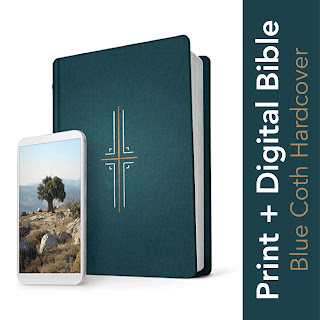
The NIV Filament Bible

In April of this year, I started reading through the book of John. I was so excited about it, and decided to take it slow.

I'd just made it to chapter three, and Nicodemus' conversation with Jesus on Easter Sunday. I woke up that morning and got on Instagram, to see an ad from Tyndale House on Instagram. They were advertising a new Bible called the Filament Bible, and the ad was for a trial-run in the book of John.


What's interesting about this Bible is that it is connected to an app with the same name. You can scan the pages of the Bible and find that exact page in the app, where you will be given historical, cultural, theological, and informational sections.

There are videos from the Bible Project, as well as interactive maps, charts, graphs, and other informational tools, alongside of articles and verse-by-verse information pulled straight from concordances. 

Of course, I HAD to get this Bible because I knew it would enhance my study of John, and ultimately, the Bible. After I purchased it and started reading it, I saw that its information is adding another layer to my personal studies. The book of John now in my personal Bible is psychedelic from all my notes!

As a traveler, this Bible is amazing because you can carry the Bible and not have to carry all the other books to go along with it—it's all in the app. I honestly will always prefer books over screens, because I like to interact directly with the text by underlining and highlighting, but this Bible is a great tool for travelers or a challenged budget (because you don't have to go out and buy all those resources yourself).

Monday, June 3, 2019

The AD Chronicles by Bodie and Brock Thoene

So... after the Zion Covenant, the Zion Chronicles, and the Zion Legacy by Bodie and Brock Thoene, comes the A.D. Chronicles—not only in the order they were written, but in the intended order to be read.


There are 12 books in this series, and what's so interesting is that each one has a title that corresponds with the number First LightSecond TouchThird Watch, etc. That makes it easy to keep track of where you are in the series, haha!

What's so fascinating is that this series is set back in first century Jerusalem, in the time of Jesus. How the authors connect it to WWII Europe and the Six Days' War of 1948 in Jerusalem is for you to discover. 

Click here to immerse yourself in the world of Jesus, the disciples, and first century Israel!

Monday, May 27, 2019

Honor and Shame in the Zion Legacy Series

So, before moving on, I wanted to address something else I found so fascinating in the Zion Legacy Series by Bodie and Brock Thoene.


Throughout the first 3 books, there's a sub-story that is so significant in terms of culture and honor/shame in the Middle East (again, spoilers ahead... but this series was published in the early 2000s, so it's not like it's new).

Basically, there are two Arab brothers, orphan boys, Dauod and Gaman, who are fighting against the Jews. They hate the Jews as a people group, but they are friends with Yacov and Shaul (Yacov's dog).

When Gaman is seriously injured, the boys go to the only safe place: a convent where the hurt and dying are being treated. Gaman undergoes surgery by a Jewish doctor, who saves his life. Before Dauod knows that Doctor Baruch is actually a Jew, he says that he shall be Dr. Baruch's son and will honor him as such for what he did for Gaman.

Then, Dauod discovers that Dr. Baruch is a Jew. But it doesn't matter—Dauod has already made his vow.

For the rest of the series, you see his struggle as he thinks of himself as and introduces himself as Dauod, the son of Baruch. He finds himself fighting on behalf of the Jews to honor to his father and his vow.

I LOVED this sub-story because it is so different from Western culture. We'd say, "well, I didn't have all the facts, so I don't have to keep this". But Dauod didn't do this. Even as a young boy, he knew the seriousness of his vow that it meant leaving his band of rebel boys/teens and acting on behalf of the people group that he had been fighting against (even in light of his friendship with Yacov).

What do you think of this example of honor/shame and the importance of family in the Middle East? How does it differ from your culture? How can it shed light on things we read in the Bible?

Monday, May 20, 2019

The Zion Legacy Series by Bodie and Brock Thoene

So, I just finished reading the next series in the ongoing story written by Bodie and Brock Thoene: the Zion Legacy Series. (Caution- spoilers ahead if you haven't read the first 2 series fully)


Zion Legacy picks up where the Zion Covenant Series and the Zion Chronicles Series leave off, except a few weeks later—3 weeks after Israel's Independence day in 1948. You see the same characters from Zion Chronicles: Moshe and Rachel Sachar, Rabbi Lebowitz, Yacov, and Shaul, David and Ellie Meyer, Ehud Schiff and others.

But, they are joined from some familiar faces from Zion Covenant: Jacob and Lori Kalner, Alfie Hadler, and more.

I will say, that through all 3 of these series', there are times that it's difficult to follow the action because there's so much fighting; so much war—which is realistic. It's just easy to get lost in it all because there are times, especially in Zion Chronicles, where it seems just like battle after battle after battle.

But this 3rd series, Zion Legacy, is very different (especially the last 3 books). And there's a FASCINATING sub-story that I wanted more and more off. Rabbi Lebowitz takes Moshe Sachar down into the tunnels to a secret room that is INCREDIBLE and is filled with scrolls that have been kept in hiding since the beginning of Jerusalem. Basically, only 1 man knew at a time that this room existed throughout history, passing the knowledge on to a younger man when they were near death.

Oh man- read this series so that you can go through the tunnels along with these men and spend time in this secret chamber!

Monday, May 13, 2019

Paul Through Mediterranean Eyes: Get This Book!

That's it for our series on Kenneth E. Bailey's Paul Through Mediterranean Eyes! I hope you enjoyed this brief glimpse of the depth of these cultural studies available to us from the time of the Early Church.

As always, I only am featuring just part of it because I so strongly believe that if someone went to the trouble to write a book, then it should be purchased and enjoyed by each reader. So, please, check it out!


I wish there were a book by Bailey for each book of the New Testament, but unfortunately (for us!) he passed away in 2016. He did write some other books, however, and they are definitely on my list to check out!

Monday, May 6, 2019

Paul Through Mediterranean Eyes: 1 Corinthians 13

In the first 2 posts of this series of Paul Through Mediterranean Eyes, I mentioned that Corinth was a town known for its brass works, dating back to 4th century B.C. In fact, earlier in the book, author Kenneth E. Bailey says that many of the craftsmen likely escaped Corinth during its destruction in 146 B.C. and returned to restart the guilds when the city was reborn.


Bailey cites a source that says the bronze work was performed in the center of the city and then tells a personal story of visitor's brass-maker's market in Aleppo, Syria, in the 1980s. Bailey says that at first, he asked for directions, but soon he didn't need them anymore—the hammering and clanging of more than 200 craftsman led him there. "Even though all of this craftsmanship was taking place in open air, the noise was deafening," Bailey remembers, "To talk to any of the skilled workmen, I was obliged to bend down, place my lips within 2 inches of the artisan's ear, and show at the top of my voice. The noise levels were ear-splitting."

In the next paragraph, Bailey points out that "as tentmakers, Paul, Aquila, and Priscilla would have needed to be present in the marketplace in order to pursue their trade and contact customers. Enduring the high-pitched racket of banging brass would have been a common experience for all Corinthians every time they entered the market" (pages 360-361).

After reading this and imaging the clanging, hammering, and shouting going on, how does the imagery in this verse ring even louder? 

"If I speak in the tongues of men and of angels, but have not love, I am banging brass or a clanging cymbal" 1 Corinthians 13:2 (NIV)

WOW! I can hear it now, the difference, the cacophony of noise, in a way I couldn't before!

Paul continues the brass metaphor in verse 7, with the list that begins with love covers all things (the NIV says "always protects", but the verb used here is stego, which has to do with the connection of keeping water in (or out). In fact, the noun form of this verb means "roof", because of its meaning of being waterproof. "As brass manufacturers, the Corinthian metal workers would have been careful to make pitchers, bowls, and drinking cups that did not leak (page 376).

Finally, in verse 12, there's another brass-work metaphor, this time having to do with mirrors—which, in the ancient world, were made of brass. They had an interesting practice in that when someone ordered a mirror, the artist would offer to etch the face (or back) of the mirror along the lines of the customer's interests. Discovering that the buy worshipped Poseidon (for instance), the brass worker would obligingly lightly etch the face of Poseidon (and perhaps other gods) on the mirror. Then, upon rising in the morning and looking into the mirror, you would have the pleasure of 'seeing yourself among the gods.... But alas, the mirror soon tarnished and the mind games quickly grew old. The person was not really among the gods, and they did not talk to him or her" (page 381).

So, how does knowing the above custom, shed new light on the setting of this verse?

"For now we see in a mirror dimly, but then face to face. Now I know in part; then I shall know fully, even as I have been fully known." 1 Corinthians 13:12 (ESV)

I love how Paul used contextual examples in each of his letters that his readers would have immediately picked up on and recognized. It would have shown his intimate knowledge of their world (and struggles) as well as made it so understandable in a time when it all seemed like uncharted waters.

I don't know about you, but now I can't stop hearing the clanging brass when I think of this chapter. What a powerful image of how not to live!