Showing posts with label Golan Heights. Show all posts

Sunday, October 30, 2022

The Golan: Ancient Katzrin (Part 1 of 4)

The Golan Heights is a place of incredible Israel history, filled with conquests, epic battles, and important lessons. 

"Golan" is mentioned in Deuteronomy 4:43, Joshua 20:8, and 1 Chronicles 6:71 as a city of refuge in Bashan. Throughout Biblical times, the Golan was a focus of a power struggle between the Israelites and the ancient Arameans from near Damascus.

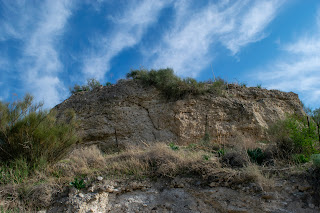
King Ahab of Israel defeated Ben Hadad I of Damascus near Afik (pictured above) and years later, Elisha prophesied the victory of King Jehoash of Israel over Ben Hadad III of Damascus.

Jewish exiles from the Babylonia settled here in the 5th and 6th centuries BC, and during the inter-Testamental period, Judah Maccabee and his brothers came to the aid of Jewish settlements there (above info found here). 

By 1st century AD, Gamla was the capital of the Golan, and fell as the last Jewish stronghold to resist the Romans in 67 AD.

Despite the fall of Gamla, Jewish settlement continued to grow in the Golan, and during the Byzantine Era (4th-7th centuries AD), Jewish settlement in the Golan Heights reached its peak. During that time, 27 different towns (with synagogues) were built up along the area. And after the Six Day War in 1967, excavation began. Over the next few weeks, we'll look at a series of locations throughout the Golan that tell part of its incredible story.

First of all, the meaning of the Talmudic Era. The Talmud is a set of teachings and commentaries on the Torah that form the basis for Jewish law. It was written during the time of the Byzantine Era, hence the name

In the city of Katzrin is lies the ancient Talmudic village of Katzrin. It's a really cool interactive park where people can go, learn about things like the olive press, wine press, and threshing grain, while also touring ruins from the Talmudic era. There's a village and the remains of a synagogue!

this isn't the olive press; I didn't get a good picture of it.

I could totally picture Eden from The Chosen smushing grapes in here!

grain sifter

These areas were fun, but I enjoyed most walking through the ruins (of course):


And we got a surprise at the synagogue—a modern day ceremony!


These children were being given their very own copies of the Torah!


the carving of the menorah is interesting here... I'll explain more in a future post.

Walking through the Rabbi's house was also really neat:


can you guess where the refrigerator is?

here it is! keeps out the critters


This was a really cool place. As a BIG fan of HGTV in the States, the house was the most interesting thing to me. What was your favorite part?

Stay tuned for next week—Afik!

Monday, August 22, 2022

Weapons, armor, coins, and more from Gamla! (Part 3 of 3)

A few months after hiking Gamla, I got to go to the museum in Katzrin with the artifacts from the seige. To say I was freaking out was an understatement!

The Katzrin Archeological Museum has an excellent display (and air conditioning, haha) of more than just Gamla. It's too much for me to tell about in this blog, so I'm just going to focus on what I consider the crown jewel: the telling of Gamla's story.

In addition to the telling of this incredible discovery (a pristine site after 1900 years... other than natural damage, haha), we were able to see artifacts from the dig. Here's just a few:


spears and arrowheads!


a piece of a scabbard

part of Roman armor

coins

coins


oil lamps, weapons, and more

WOW! I still would love to see the suit of armor that was stuck in a ceiling, but I think that's in a museum in either Tel Aviv or Jerusalem. So maybe one day!

I love being in Israel... you can enter into the story like no where else!

Sunday, August 14, 2022

Into the Breach! (Part 2 of 3)

After its destruction in AD 67, the city of Gamla, once capital of the Golan, lay in ruin for 1,900 years.

Then, in 1968, it was rediscovered in a study of nature reserves (inside the park is an incredible reserve where you can observe birds, a waterfall, etc). So much here confirms that this is the real Gamla—the description of the city matches that of Josephus', plus the discovery of Roman weapons, armor, arrowheads, ballista balls, iron nails, and even coins.

Wow!

In the last blog, I only gave you the overview of Gamla. So now we're going on an up-close-and-personal tour! Are you ready?

Into the breach!

This is it—the literal breach of the wall. This is where the Romans first tried to get in and the soldiers got stuck in the switchback design of the city! WOW!


The ancient synagogue, built early in the first century AD, during the time of the 2nd Temple. It's actually one of the oldest synagogues ever discovered in Israel!


The mikveh


Remains from the structures dating to the 1st century BC (Hasmonean period):


The view from the partially rebuilt tower (because its collapsed is what facilitated the entrance into an destruction of the city, it was rebuilt to give visitors an idea of what it was like). 


The cliff where everyone jumped:

One thing that is interesting though... this is definitely Gamla. But no piles of bones or remains of the 9,000 Jewish people who died have been found. So... what happened to them? Did the Romans care enough to bury them in a mass grave? Did the birds (so well-known in this preserve) carry them off? 

Their remains remain yet to be found.

What do you think about the story and site of Gamla? Please let me know in the comments below!

Monday, August 8, 2022

Gamla: Northern Israel's "Little Masada" (Part 1 of 3)

When I first heard I was going to Gamla Nature Reserve, I kind of shrugged and was like, "I have no idea what that is."

Literally, I. Had. No. Idea. 

As in, this was one of the places that came to me as a great surprise, and I love it when that happens!

First of all, the views were insane. But the history is what took my breath away even more than the hike did (and it was a doozy!).


Located in the Golan, on the eastern side of the Sea of Galilee, Gamla is a small, camel-backed mountain surrounded by taller ones, nestled between two ridges and ravines. Originally built up in the early bronze age. It's believed the city walls existed before Israel's conquest of Canaan under Joshua. The area was known then as Geshur, and is mentioned in Joshua 13:11-13).

It was eventually resettled by returning exiles from Babylon, and Herod the Great re-settled peoples here in order to populate border cities. For about 150 years, this was the capital of the Golan, known for producing high-quality olive oil.

Streams flow on either side, and you can hear the water as you climb up. There's only 1 way in, and there was a 6 meter thick wall barricading anyone who wanted to enter. The mountain itself has a steep ridge ending in a sharp cliff. The people of Gamla lived on a slope on the eastern side. 

And that cliff is where they died. 

But I'm getting ahead of myself. The reason why Gamla is called "Little Masada" is because its story is very similar. But that doesn't make its heroism and heartbreak any less powerful. 

Gamla was built in such a way that they were able to thwart a 7-month siege of King Agrippa II and a Roman invasion in 66AD. Led by Vespasian, 3 legions of soldiers (each one between 4,000 - 6,000) laid seige and a month later, attacked. They entered the city and began to fight, but the pathways were switchbacks, and soon there was a giant bottleneck. Soldiers tried to climb on top of the buildings, and they collapsed, killing all of them.

2,000 years later, excavations revealed some incredible things, like a skeleton with armor stuck in the collapsed roof, with arrowheads and other weapons all around—literally just stuck in time.

This shook the Romans. NO ONE had been able to thwart them yet.

So they tried again.

One night 3 Roman soldiers dug under the tower, removed some stones, and the tower collapsed. Suddenly, they had access into the city.
According to Jewish historian Josephus, the people of the town knew this was it. It was over and they would be taken into slavery (or worse). So they climbed as high as they could behind the city, up to the cliff’s edge- then started jumping off. Once again, it was a choice between death or
slavery. Over 9,000 Jews died.
(the cliff they jumped off)


As we climbed entered Gamla and started exploring, looking at the mountains and ravines all around, a friend said to me, “Can you imagine waking up and you are surrounded by 3 legions of Roman soldiers, hearing the thumping of their weapons and armor?”

She imitated the sounds of the Orcs in Lord of the Rings marching on Helm's Deep, and suddenly I could see it—legions of Roman solders, covered in armor, swords and shields glinting in the sun, horses neighing: all proclaiming to the citizens of Gamla to surrender.

They stood to the very end.


Come back next week for part 2 of this series!

Sunday, January 30, 2022

Where Jesus sent the demons into the pigs

When I saw Kursi National Park on Google Maps while I was in the Galilee, I thought it just had some cool ruins of an old church. I didn't think it was a Biblical site.


And to be fair, these ruins really are cool, mostly because I love arches. And some of the original floors from this church from the 5th century. 


I mean, who doesn't love original floors?


But what I didn't realize until I started exploring is that this national park is in the Gerasenes, where, in Mark 5:1-20, Jesus healed the demoniac and sent the demons into the herd of pigs, who then ran over the cliff. 

The freed man then went into the area of the Decapolis to tell of what Jesus had done). I checked googlemaps, and Beit She'an is actually pretty far from there...almost 40 minutes driving. But Mark's account speaks of the local people being angry and afraid, telling Jesus to leave the area, and Jesus telling the man to go far away. So maybe he went to the city of the Decapolis that is at the foot of Beit She'an. It's also likely he went to Susita (Hippos), which was also one of the 10 cities of the Decapolis. That is closer to Kursi National Park, and I hope to go there soon).

Either way, this is the traditional location of that cliff! 


As I've said before, the Sea of Galilee has shrunk a lot over the years. Right now it's about 13 miles long and 7 miles wide at its widest point. There's actually a trail that goes up from the left to just before the actual cliff face, and the remains of an old chapel are there as well.

The cliff from directly below it:
The location of the water makes it reasonable to think that it could have touched the edge of this mountain, as the Sea of Galilee has shrunk a lot since the first century.


So fun!!!