Showing posts with label reading the Bible in color. Show all posts

Monday, November 1, 2021

Pearl in the Sand by Tessa Afshar

Pearl in the Sand, by Tessa Afshar, is an incredible book!


Following the story of Rahab, Afshar gives the reader a beautiful glimpse into what it might have been for this woman, a Canaanite prostitute in Jericho, to betray her people by helping the spies of Israel and then joining the people of Israel... later to marry a leader in the tribe of Judah and give birth to Boaz, who is in the line of Jesus. What an incredible redemption of her story!

I was fascinated by the cultural elements of this story, and the in-depth exploration of Rahab's journey as a foreigner, a member of an enemy people, and a prostitute, to 'ancestor' of Jesus. In addition to her struggle, Afshar also gives insight to the current conflicts in the people of Israel, highlighting that this is not long after Moses has died, as well as the last of the earlier generation of people who escaped Egypt. This is a group of people—millions—who didn't know what it meant to stay in one place, to work the land, or to settle down. The psychological dynamics of that are so interesting to me! 

There were definitely physical, mental, and spiritual elements of this dynamic as well, as Joshua says to Salmone on page 100: "'I understand the root of your opinions; I know how you formed them. It's part and parcel of the way you young ones grew up. Your generation has had a hard lesson to learn. Your parents' and grandparents' lack of faith and disobedience changed your lives. Instead of being born and raised in homes of your own, you've endured the hardships of a meandering existence. You have never known the routine of a stable home life. The one security you young ones have known has been the Lord. It has made you cling to God in a way your parents weren't able to do. Perhaps your children's generation won't inherit your resolve either. Maybe that's why God allowed you to become wanderers in the first place.

But there is an underside to every strength, and yours is showing right now, Salmone. You have grown judgmental in your attempt at righteousness.'"

This book is obviously Biblical fiction, based on extensive research and also the author's imagination. But this paragraph really grabbed me, because it took me into the world of the younger generation of Israelites and their culture. Having lived with the consequences of their parents' and grandparents' sin in such a national way, it makes sense that it would greatly impact the younger generation in a powerful (and opposite) way. 

Was the problem described by Joshua (at Afshar's hand) a real problem? We might not know until Heaven, but I can't wait to find out! Let me know what you think in the comments below!

Tuesday, April 6, 2021

Have you seen Ep 1 of Season 2 of The Chosen yet?

Have you seen Ep 1 of Season 2 of The Chosen yet?


WOW!

I thought it was incredible... what did you think?

I'm not going to give any spoilers away because it just came out (we can save that discussion for the comments)! But I did want to comment on something that stood out to me that isn't a direct spoiler, and that is how the show deals with honor and shame.

As discussed in previous posts, honor and shame was big in 1st century Jewish culture (and still is today). Whereas Westerners from individualist cultures see the world through innocence and guilt, in this collectivist culture, the concept of bringing shame on one's family (or honor) is the most motivating factor. 

There were so many examples of this in Ep 1 of Season 2 (as well as in season 1), from the key dinner scene where Jesus extends grace and saves the man's honor, to the first time we see him angry. And then, a precious, beautiful scene with one of those he rebuked, where honor is restored. (I'm lower-casing 'he' here, because those are all fictional events thought up by the show's creator, but they 100% appear consistent with Scripture. It's just that we don't know if these actual events happened). 

Could you see the examples of honor and shame culture here? What did you think of the episode overall? I'm sure we'll continue this discussion in future episodes. Y'all know I'm gonna keep talking about the show because this is basically me:


I love this show and want to share it with everyone, because I think it has the incredible potential to bring people to Jesus. 

You can catch the show here on their website or, best of all, download their app, "The Chosen", from either the apple store or google play, and cast it to your tv that way. Let me know what you think!

Monday, September 28, 2020

A Multitude of all Peoples: the early church in Asia

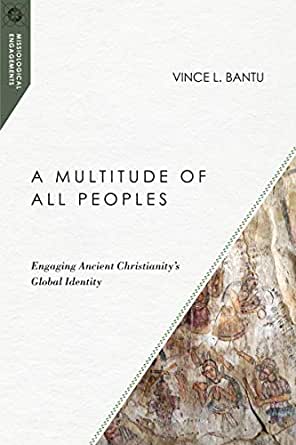
For the last several weeks, we've peeked at the history of the early church in Africa and the Middle East, based on A Multitude of All Peoples: Engaging Ancient Christianity's Global Identity by Vince L. Bantu. 

I say "peeked" because I just choose small things that stood out to me, in hopes that it inspires you to go read this book and fully explore Bantu's work

This week, we're going to explore his chapter on the early church in Asia. Like the previous posts, I'm just going to point out what stood out to me the most:


  • Christianity entered Persia through Jewish communities no later than the 2nd century, and over the next 200 years, while Christians in the Roman Empire experienced severe persecution, this was not the case for Syriac-speaking Persian Christians. This means it was safer for Christians to live in places like Iraq, Iran, and Afghanistan than in Greece or Italy! (pp. 165-167)
  • As Christians from the Roman Empire fled east to the the Persian Empire, the government began to be suspicious of all Christians, connecting Christianity with the Roman Empire. "The Western cultural captivity of the Church began under Constantine, and the Persian Christians were the first non-Western Christians to suffer the consequences of this phenomenon" (i.e. people today thinking that Christianity is the 'white man's religion'). p. 170
  • The Nicene Creed is written in the collectivist 'we' versus the Western "I", showing the Eastern influence of thinking in its creation (p. 172). To read more on this topic, check out this post
  • In the 7th century, the Church continued to expand East, from Afghanistan and Uzbekistan to the earliest Christian mission to China (p. 177). 9th-century Syriac Christian manuscripts have been found in a monastery in China dating back to the 5th century! (p. 191)
  • "In the medieval period, the Church of the East experienced some of the greatest missionary success and expansion of any Christian community in history, starting in Persian territory and extending all the way to the Pacific and Indian ocean" (pp. 179-180).
  • Mongol leader Ghenghis Khan was tolerant of Christianity in the lands he conquered, including China (p. 212)
  • The decline of Christianity in Central and East Asia began with Islamic persecution at the beginning of the 14th century (p. 216).

That's it for this series on A Multitude of All Peoples! What did you think? I'm purposely not covering the chapter on the Church in the Western world for one reason - I want to give full focus to how the church began throughout the non-Western world. However, I do want to leave this series with a quote from Bantu's conclusion:

"The tendency for Western culture to act as the barometer of Christian orthodoxy is a trend that reaches back to the Romanization of Christianity. It is important to recognize and lament the reality of the Western, white cultural captivity of Christianity, and for the people of God to take responsibility for the genocide wrought on countless millions in the name of (Western) Christianity. It is equally incumbent to recall that the Christian faith did not have its beginnings—nor the totality of its history embedded in white supremacy.....

This point is crucial, as contemporary non-Western non-Christians can easily dismiss the rapid growth of Christianity in the non-Western world as simply a function of Western colonialism and US American globalization.... 

Cognizance of Christianity's deep African and Asian roots dispels the common sense of indebtedness of Christianity to the Western world. Rather, early African and Asian Christianity provides an entry point free from Western dominance for a contemporary non-Western convert to Christianity" (pp. 220-221).

and
"The Western, white cultural captivity of the church [the belief that it is the 'white man's religion'] is the single greatest obstacle for people coming to faith in Christ....Christianity was expelled from China twice for cultural, rather than theological reasons....If it is the desire of the Church to exist deeply rooted for the long term for all nations, tribes, and tongues, it is necessary for the Gospel to be stripped of any geocultural association" (p. 225). 

My hope for every reader out there is what I experienced in reading this book: a greater appreciation and understanding of the history of the Church as a whole. It is so rich and way beyond the depths that even Bantu could plumb—although I know I'll be coming back to this book again and again to re-learn and gain greater understanding, as it was too much to take in for a first read-through. This book is definitely going on the shelf! 

I hope you enjoyed this series; I most definitely did! If you are interested in reading this book, you can purchase it here on Amazon!

Monday, September 21, 2020

A Multitude of all Peoples: the early church in the Middle East

For the past 2 weeks, we explored the history of the church in Africa, based on A Multitude of All Peoples: Engaging Ancient Christianity's Global Identity by Vince L. Bantu. I hope those brief posts made you want to get this book and read more about the first African Christians.

Now, we're moving on to the early church in the Middle East!


Again, there's just so much that Vince L. Bantu shows the reader, and I feel the best way to go about this is to highlight some of the things that stood out to me. Hopefully this will continue to whet your appetite for this incredible book! So first, we're going to start with Israel's immediate neighbors:

  • The term "Christian" was first used in Antioch, in Syria, but over the centuries, "there have been many Christian communities various ecclesiastical, national, and ethnic affiliations that shared a common heritage root in the Syriac-speaking world" (p. 119)
  • Syriac is a dialect of Aramaic that began in Turkey, and became the dominant language of Asian Christianity, even until the medieval period. The Syriac Bible was translated no later than the 2nd century (could have been at the end of the first century). The Syriac Old Testament is unique because it was translated directly from Hebrew instead of the Greek Septuagint (pp. 120-121) 
  • Arabia is one of the regions with the earliest presence of Christianity, because Paul went to what was likely northwest Arabia and Jordan.
  • There were Syriac-speaking Persian Christians living in Qatar until the 6th century.
  • Some of the earliest Arabic inscriptions date back to 340—2 centuries before the birth of Muhammed—and were Christian in nature. A few even had crosses, and this means the Gospel of Jesus Christ was proclaimed in some of the earliest words written in the Arabic language (p. 147).
  • A decade before the "christianization" of the Roman Empire, the Armenian king Tiridates converted to Christianity (302 AD). He destroyed pagan temples and built churches; "it is noteworthy that Armenia, while wedged between 2 larger pagan empires, became the first Christian nation an a time when the notion of a Christian nation would have been inconceivable (p. 151)!
  • Mount Ararat is actually in Armenia, not in Turkey like I thought.
  • With Greek-speaking Roman Empire on the west, Syriac-speaking Persian Empire on the east, Greek was the liturgical language in Armenia until the 5th century. Armenian was spoken by the people but it did not have a written language—which meant that the majority of clergy were foreigners. Sensing the need for indigenous Armenian leadership and a written alphabet, the Armenian scholar Mesrop Mashtots created an Armenian alphabet and provided the first translation of the Bible in Armenian. He started with Proverbs, and the first words of Scripture written in Armenian were: "To know wisdom and instruction, to perceive words of understanding." Proverbs 1:2 (pp. 152-154)
  • The Georgian king also declared his nation a Christian country in the early 4th century, and like its neighbor, Armenia, had an alphabet developed for the purpose of translating the Bible and composing original theological literature (pp. 157, 159).


Talk about a rich, beautiful history of the church in the Middle East! Were any of these facts new to you? How does this impact your view of the fullness of the Church and Christian history? I'd love to hear from you below!

Monday, September 7, 2020

A Multitude of All Peoples: the early church in Africa (Part 2)

Last week we started talking about the history of the church in Africa, based on A Multitude of All Peoples: Engaging Ancient Christianity's Global Identity by Vince L. Bantu. 

I decided to end the post earlier than planned, because the final quote I shared was so powerful I wanted to leave it on that thought.


But now, I want to continue with the list I started, of sharing things I learned about the Church's rich history in Africa:
  • The Ethiopian Church, which became strong and flourishing in the 4th century, were committed to the teachings of Scripture and willfully rejected traditional African religion. This is significant giving the commonly held assumption that Christianity's beginnings in Africa were by force and that all Africans who rejected their traditional religion did so by compulsion" (p. 106). This was still true as late as 1468 AD.
  • Tertullian, of North Africa, was the first major figure to develop Christian theology in Latin (p.110).
  • Perpetua, a noble woman from Carthage at the end of the 3rd century, wrote The Passion of St. Perpetua, St. Felicitas, and their companions, a story depicting the persecution and martyrdom of several North African Christians—including herself and her pregnant slave, Felicitas. "That Perpetua's husband is not directly mentioned, that she refuses the pleas of her father to apostatize, and that the central figures of this early Christian text are female challenged the male-dominant culture of early Christianity. Indeed, if the common proposition of Perpetua's authorship is correct, the Passion is the earliest Christian text written by a woman" (p.111).
  • "However, Christianity in North Africa was in large part centered on the wealthy, educated, Latin-speaking, urban population.... Muslim sources in Arabic indicate continuing Christian presence in North Africa for centuries after the conquest... Interestingly, one of the most common terms for Christians in Africa in Arabic was afariqa—indicating a significant degree to which 'Christian' and 'Africa' were synonymous concepts" (p. 117-118).


Wow- these are all really interesting to me. Were any of these facts new information for you? I'm so thankful for the work Bantu did putting this history together! Please let me know below what stood out to you.

Next week, we'll explore the early Middle Eastern church!

Monday, August 31, 2020

A Multitude of Peoples: The early church in Africa (Part 1)

After discussing Antipas L. Harris' Is Christianity The White Man's Religion?, I knew immediately the next book I wanted to explore on the topic of reading the Bible in color: A Multitude of All Peoples: Engaging Ancient Christianity's Global Identity by Vince L. Bantu.

Quite simply, this book took my breath away.


Bantu takes the reader through a thorough description of the history of the Church, starting with the issue of why Christianity is so often associated with the Western world, even "though the majority of Christians now live in the Global South" (page 1). But what I want to focus on are the next few chapters, because the wealth in them is incredible. 

Even just focusing this post on Africa is too much to really fit into one post, so I'm going to write in bullet points below. While I have known that truth behind the premise of this book (that Christianity is a global religion and the non-Western world had a big impact and presence on it throughout the last 2 millennia), I learned a lot. Here are just a few things I learned specifically about the early church in Africa:

  • Alexandria and Egypt represent the gateway for Christianity in Africa, which attributes the spread of the Gospel to the Apostle Mark. "Alexandria was one of the largest and most cosmopolitan cities of the Roman Empire in Late Antiquity—a meeting point of Hellenistic, Jewish, native Egyptian, and other influences. (pp. 72-73, 74)
  • Among the Biblical fragments from 2nd-century Egypt is a fragment of the Gospel of John, which is the earliest material evidence of a canonical New Testament text (p. 73).
  • Theologians Clement (Egypt), Origen (Egypt), Irenaeus (Libya), Tertullian (Libya), Augustine (Algeria), and so many more were from Africa.
  • The painting of the nativity in the monastery at the capital of Dongola from the late 10th century "represents early evangelization efforts from the Nile Valley Christians of Nubia to cultures further south and west in the African continent. The Gospel had already been spreading along the Nile river from Egypt to Nubia and then Ethiopia. This painting represents the continued spread of the gospel from Africans to neighboring Africans. If the Western church had not condemned, oppressed, and isolated the early African church, leaving it open to Islamic domination, the Gospel may have continued to spread to the extremities of the African continent at an early period. Yet this painting raising the intriguing potential of Western and Central African Christians before the advent of Western colonialism" (page 95).
I'm going to stop here and continue this topic next week, because that's exactly what the above quote did to me when I read it: it stopped me in my tracks. It reminded me of Marvel's Black Panther*, and how it is a powerful, undeniable visual of how Africa's story was violently disrupted by Western colonialism in the worst way. This also includes the history of the African church, which is rich beyond what any of us can fully imagine.

What about you? Were any of the above points new information for you? Does it impact or change your understanding of the early church and the history of Christianity at all? I'd love to read your thoughts in the comments below!


*I wrote this post on Thursday, Aug 27, 2020, and in the writing of it, experienced a renewed desire to re-watch Black Panther. The next night, while staying with a friend, we made plans to watch it on Saturday. After that conversation, I opened my phone and read the shocking news that Chadwick Boseman, the actor playing BP’s main character, King T’Challa had passed away after a 4-year silent war with cancer. Since then, I’ve re-watched the movie 2x, and am still amazed at the incredible- and important- world of Wakanda.


Monday, August 3, 2020

Acts of Faith Series

Continuing with the theme of the Early Church, I want to share about this really cool series I read a few years ago. The Acts of Faith series is fiction, set in the time of the crucifixion and right after. It follows characters like a Roman-centurion-turned-Christian, the disciples, Stephen and so many more.

Essentially, it's a fictional retelling of the beginning of the book of Acts.


What I love about this series is how the authors brought that world to life. Suddenly, the reader is immersed in the culture and issues of the day. What does it mean for the Roman centurion who now is a follower of the Way? What is it like to be a Jew and suddenly also be a Christian—in a very Jewish culture? How does it feel to be "figuring Christianity out" in this world?

The scene that hit me the most in this series is with Ananias and Sapphira. The reader is right there, seeing Ananias bring his offering, lie, and drop dead, and then the same happening with Sapphira. To us, it's a retelling of a story we know—no big deal. But to the early church... wow. Can you imagine being there that day and seeing what happened? Or hearing about it after? What would your first thought have been after? Would you have been afraid? 

Obviously, the seriousness of what it meant to become a follower of Christ isn't lost on them, as so many were witnesses to Jesus' crucifixion, burial, and resurrection. But, the "stakes" don't stop there, as now they are trying to figure out what it means to be the Church... and it's not in a bubble, but right in the heart of the Roman Empire, where followers of Jesus are actively being persecuted and killed. 

Unfortunately, this series ends WAY too soon. I was SO EXCITED to get to Paul's story and his journeys, but it stops abruptly. It's still a wonderful read; I just hope that one day I can read the re-telling of the rest of the Acts story through this series!

Monday, June 15, 2020

A response to racial tensions in Israel

What I'm going to focus on today might seem off topic, because at the outset it doesn't seem to have anything to do with Israel. Ultimately, it's my blog, so I can talk about what I want, right?

But in light of what I talked about last week, and here in April, I feel charged to share this conversation about the Church and Race. Last week, Bishop T.D. Jakes hosted a panel discussion online about recent events in the US—and where to go from here.

At first, I wasn't sure I'd watch. I only recognized 2 faces other than Bishop Jakes (the women), and it's very clear what appears to be out-of-balance about this panel. Why was this about race, when all the invitees (other than the host) are white?

Well, Bishop Jakes explains this at the end, and I don't want to spoil it for anyone. But I will say here that the two women on this panel, Christine Caine of international anti-trafficking organization A21 and Dr. Caroline Leaf, a neuroscientist and mental health expert, aren't from the US. Caine is Australian and Leaf is South African. So they both had very interesting insights, not just from their professions, but as foreigners to the US (and especially Leaf's perspective as someone who lived through the apartheid-era in South Africa).

What I do want to say, is PLEASE GO WATCH THIS DISCUSSION. It's an hour and 37 minutes long, and I had to watch it in 30 minute chunks just because there was so much weighty TRUTH in there that I needed to take time and chew on it. It is worth taking the time to watch.

And, while the topic is obviously focusing on the specific response (and responsibility) of the Church for Race, especially in light of the current events and the horrific history of slavery, injustice, and racism in the US, I think there are truths in here that could be applied to the racial situation in Israel. It could be that these are apples and oranges, but I believe all racial tension has the same root, and connections can be made from this video that we don't want to miss.

I'd love to know what you think! Please watch it (click on the photo or the link above) and let me know below!

Monday, October 1, 2018

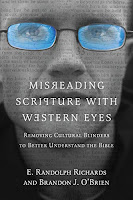
Misreading Scripture with Western Eyes: Race and Ethnicity

In Chapter 2 of Misreading Scripture with Western Eyes, the authors focus on the issues of race and ethnicity in the Bible.

There were so many "WHOA" moments for me in this chapter that I'm going to make it two posts, and even then, I won't hit it all. (Basically, every Western Christian needs to read this book).

The title of this chapter is "The Bible in Color", and wow—they did a GREAT job of showing this in just a few pages. I want to read a whole book just on this topic! On page 56, they state the reason for this chapter: "Being oblivious to ethnicities can cause us to miss things in the Bible.... Like the world we inhabit today, the worlds of both the Old and New Testaments were ethnically diverse and richly textured by an assortment of cultures, languages, and customs."

Ethnicity goes beyond skin color and national boundaries... it touches lingual, regional, and cultural significance as well.

It's easy to read the Bible and miss the mentions of ethnicity because we weren't alive then (and don't live there now), and as the authors convinced me, to do that would be to miss SO MUCH. 

Example #1: For instance, the authors give an example how in the time New Testament, anyone who didn't speak Greek were (from a Greek and Roman perspective) considered uneducated barbarians, because the Greeks equivocated speech with reason. "Barbarian" comes from the sound they made to imitate out languages... the equivalent of English speakers today saying, "blah, blah, blah" when imitating non-English speakers today.

So, in Acts 21, when the Romans were looking for Paul, they didn't know who he was—and when they caught him, they assumed he was Egyptian. Why? Because he was undergoing a purification ritual and had shaved his head. To a Roman, all of "those barbarians" looked alike. "The Roman who arrested Paul was surprised he could speak Greek (Acts 21:37). He never imagined Paul, a barbarian, might be a fellow Roman citizen." (pages 57-58)

Example #2: Here is another example they give: Moses married a Cushite woman and his brother and sister were upset. Why? Cushites were from the southern Nile Valley and were dark-skinned Africans. But the difference in skin color and cultural practices were not why Aaron and Miriam were upset. 

The authors point out that the Israelites had just left Egypt after 400 years of slavery. There were a slave race. "The Cushites were not demeaned as a slave race in the ancient world they were respected as highly skilled soldiers. It is more likely that Miriam and Aaron though Moses was being presumptuous by marrying above himself" (pages 59-61). There was a distinctive class system at play here that modern Western readers can miss because we don't understand the dynamics at play—Moses, from a slave race, married a woman from the people who enslaved the Jews. 

Example #3: Here is a final example, another one from Paul's world. On page 66, the authors point out how Paul, in talking to the church in Corinth, placed ethnic markers in the text, for example, "Apollos the Alexandrian Jew" or calling Peter by his Aramaic name, Cephas. The authors say Paul isn't addressing any theological differences between all of these people. Why? "There weren't any. The problem was ethnic division: Aramaic-speaking Jews, Greek-speaking Jews, Romans, and Alexandrians". 

How do these three examples impact how you read the Bible? How can we, as Western readers, be more aware of the influence of ethnicity in the Bible?