Showing posts with label gates. Show all posts

Monday, October 2, 2023

Where God made the sun stand still

I was unprepared for Tel Gezer.

The contrasts of Israel often take my breath away: the juxtaposition of the ancient and modern side-by-side, never more than a few feet (and millennia) apart... like watching children skip over the ruins of an ancient city while a modern one looks on half a mile away, or a family picnicking where a battle once took place.


What I knew about Tel Gezer before going was simple: as one of the places Solomon fortified, it is one of the remaining trio of cities with its iconic gates. I’ve been to the other 2, Megiddo and Hatzor; this was my chance to “collect all 3.”

What I didn’t know was that Tel Gezer overlooks the Valley on Ayalon, where God made the sun stand still for the battle in Joshua 10. The valley itself is huge; here are the views in each direction:


EPIC.
As sunset neared and turned the valley pink behind us, we walked back to the parking lot, passing these stone monuments.


These stones mark a place of ancient Canaanite worship. The soil below them has been tested, and the remains of burned infants had been found there, evidence of ancient child sacrifice to pagan gods.


I’d never been to a place like that, and, in the shock and the sorrow of the moment, I was struck again by another juxtaposition: how unimaginable it was to witness this place of sorrow at all, let alone maybe a mile from where the Creator of those infants made the very sun stay still in the sky.

It’s another contrast I’ll never forget.

What made it even more sobering was that the sign marking the monuments said nothing about the infant sacrifice that happened there. And nearby, a group of women sat in a circle. When one of my tour guides went to talk with them, they told her that this was a place of worship for femininity and fertility, and they were there to connect with each other and this place. They had no idea about the real truth of this place.


Monday, September 25, 2023

Tel Gezer: Watch out for bats!

What do you know about Tel Gezer?

Tel Gezer lies in central Israel, south of Tel Aviv and west of Jerusalem. A major biblical city that was conquered by Joshua (Joshua 10), given to the Levites, and fortified by Solomon in 1 Kings 9 after it was given to him as a wedding present from Pharaoh, its ruins date back to the Bronze Age and including civilizations like the Canaanites, Israelites, Assyrians, Babylonians, Persians, Greeks, and Romans.


There's so much here in this park that we're going to explore in 2 posts. First, the ruins!


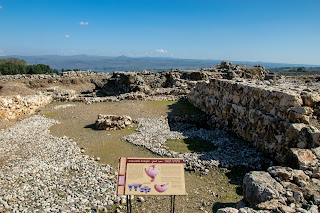
We first come to the Canaanite tower, which is close to the city gates. What's interesting here is how far down the archeologists had to dig just to get to it! Can you see the contrast from the tower remains to the height of the wall directly behind it?


Above is the remains of the tower. 

Next to it is the water system. I was going to go down there and then I heard that one was in fact full of bats- more than 1 million!- and my tour guide said: "Remember, 1 million bats = a lot of poop." I said, "That's okay, I'll take a picture of the entrance, haha."


From there, you go around to the Canaanite Gate:


Made of mud, I can't help but think of the 4,000-year-old gate at Tel Dan. Remember how well preserved it is? This one is not as well preserved.


But, can you see the mud bricks that still remain? How cool is that?

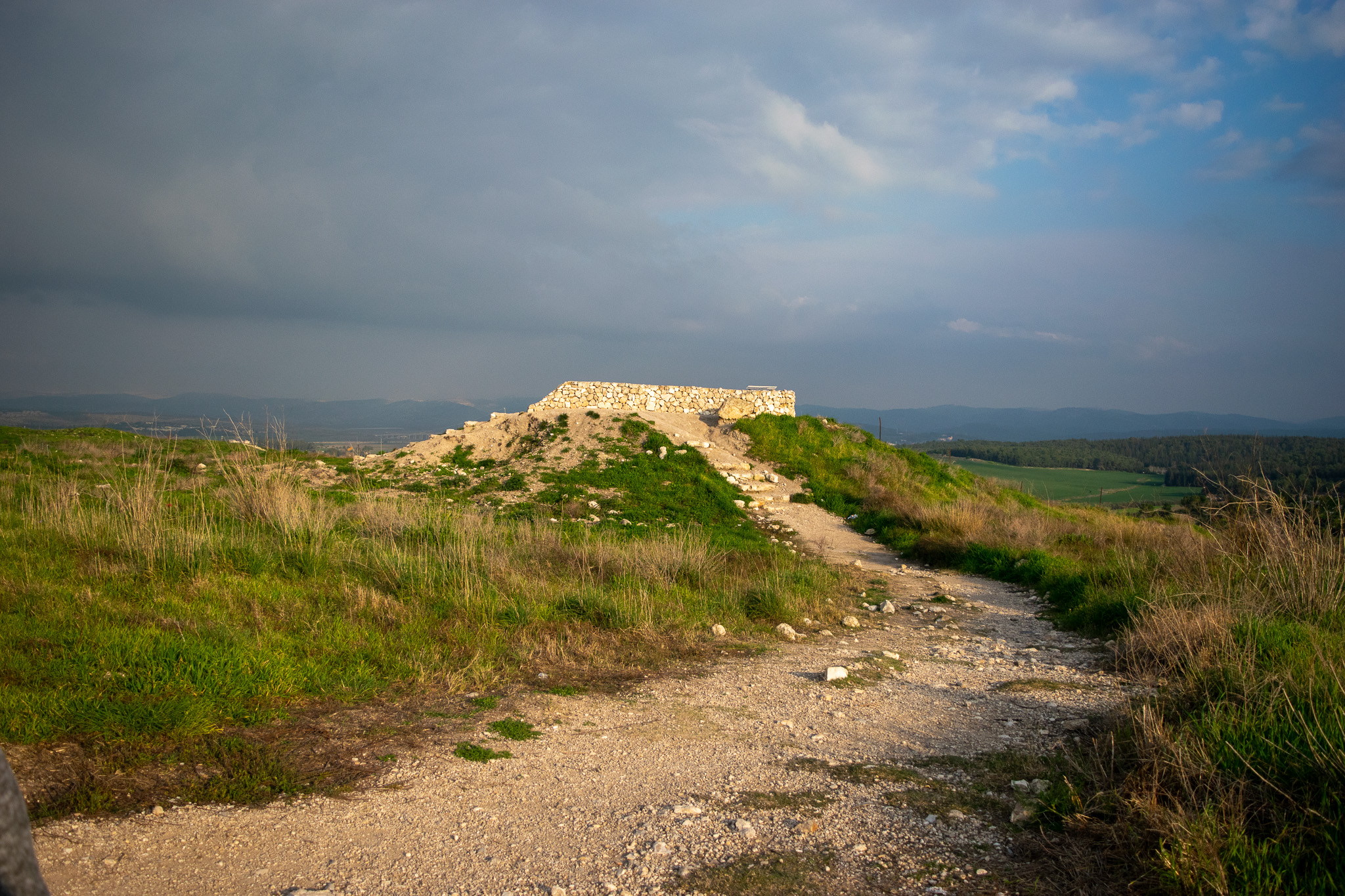
From here, you go up the hill and can see the ancient Solomonic-era city, complete with its city gates—the same ones that match Megiddo and Hazor!


The views to the valley beyond are beautiful. On the opposite hill you can see the caves mentioned where the kings of the conquered cities were buried in Joshua.


The 6-chambered Solomonic Gate!


In these photos, you can see the walls of the city are actually double-walls, with a chamber between them. It reminded me of Masada, where the families of the warriors were right there in the room with them. 


What was cool about this part were the families picnicking near the ruins. Children were exploring, walking around the walls and jumping between rocks. It's so mind-boggling to see ancient and modern side-by-side, and such a picture of how time moves on.

That's it for part 1 of Tel Gezer. Next week's post is about the most powerful part of the visit for me. See you then!

Sunday, October 9, 2022

The 4,000-year-old Abrahamic gate

It's not every day you see something that is over 4,000 years old.

This mud gate, with its iconic triple arch, has been verified to being present at Dan in Northern Israel during the time of Abraham.

When Abram heard that his relative had been taken captive, he called out the 318 trained men born in his household and went in pursuit as far as Dan.” Genesis 14:14.

This gate was only in use for about half a century before it was covered over— because mud and rain don’t mix well. The arch over the doorway is one of the earliest compete arches found in the world.


The gate has a view of Nimrod fortress in the distance, which I still need to visit!

This is only part of my visit to Tel Dan Nature Reserve, which I will talk about more next week. This reserve contains part of the Dan Stream, which makes up one of the 3 headwaters of the Jordan River. It was unlike no other park I've been to in Israel, as we got to walk through the woods and sometimes, through the streams.


And it made this North Ga girl's heart so happy! There's nothing like being in the mountains, forests, and rivers!


Monday, April 11, 2022

Tel Hazor: Ancient guard of the Via Maris

Once the largest fortified city in Israel, Hazor, or Chatzor, sits right on the ancient Via Maris, or "Sea Road" that traders used when crossing through Israel. Joshua 11:10 calls it the 'head of the kingdoms of Syria and Babylon' because of its important location. 

Now, there is an ancient tell on the site, much like Megiddo. And I was so excited to visit!

Dating back to 2500 BC, many civilizations called Hazor home, and this is evident from the expanse of its lower city (over 175 acres) and the upper city (over 30 acres). That's a lot of land... all with an incredible view of Mount Hermon!

When you first walk into the upper city, there's an incredible view of the plain where the lower city is buried (above). Then, the iconic, Solomonic 6-chambered city gates!


Directly behind them are the ruins of an ancient Canaanite temple.


Then the ancient palace, where you can walk through the throne room!

The line in the walls separates the original walls from what's been rebuilt to give people an idea of what the building looked like inside.

From there, it's on to the water system. WOW! It's over 45 meters deep! It reminds of me of the water system at Megiddo- I still need to go and walk through that!


And after that, more of the upper city:


This is a pretty cool guard tower that looks over the valley (below the field). I love the statue of the sentry, because it helps us see what it could have been like to watch over this stretch of the Via Maris.


Tel Hazor fell in 732 BC, when Assyrian King Tiglath-Pilieser III invaded northern Israel. The defences fell, the townspeople were carried away, and the city was burned.

It remained in this state for millennia, until an archeological expedition in the 1950s went to the area and began uncovering its secrets...but only some of them. I'm sure there are more beneath the surface!