Showing posts with label earthquake. Show all posts

Sunday, January 8, 2023

This desert fortress dates back to Solomon!

It's not everyday you wake up next to a fortress dating back to the time of Solomon. Needless to say, those are the days (my) dreams of made of!


But that's exactly what happened to me the weekend of Hanukah and Christmas 2022. Some friends and I were able to stay at Tamar Park, near the spring of Hazeva in the Arabah Valley of the Wilderness of Zin (part of where the Israelites wandered for 40 years).

Wow!

Being so near a spring, the location of biblical Tamara was significant, because it sat at the crossroads of ancient routes... meaning it would have been a stopping point for travelers. The archeological remains date back to the Israelite Kingdom, Nabatean, Roman, and Byzantine empires!

In 10th century B.C., the time of Solomon, this route was used to trade with Arabia, Africa, and Sheba, as is described in 1 Kings 10. Tamar is mentioned as "Tadmor" in 1 Kings 17-18. In addition to the spring, it also lay near a copper mine, which was a major trading commodity for both Kings David and Solomon. It's believed that this is why David conquered Edom in 1 Chronicles 18. Edom, which we'll talk about in a future post, is an area of the desert where the land is red. It was the ancient land of Esau. (Something that makes me wonder: it's interesting to me that the area is red, and there was copper nearby. Is there a connection here?)

Anywho, here's the entrance and the 4-chamber Solomonic gates! Remember those from Megiddo and Hazor?


But before you even enter the gates, there's actually a 4-room house dating back to 700-600 B.C. 


Nearby, archeologists found remains of shattered clay vessels used for local pagan worship. It's believed the smashing and burial of these is associated with King Josiah's reforms. 

That's it for the Israeli Kingdom history of Tamar, because this fortress was destroyed by the Assyrians in 600s B.C.

Next came the Nabateans! Underneath this fortress are the ruins of a Nabatean temple, fortress, and storage room. As with Avdat, Tamar was a stop on the ancient spice route, a 1800 kilometer, 65-day trek from Yemen/Oman to the port in Gaza.

When Nabatean King Rabbell II died in 106 A.D., Rome annexed the entire area into the Roman Empire. Tamar was known as "Thamara", and it became part of the road and defense system of the Empire.

The Romans built a square fortress with 4 towers, and later even a bathhouse and inn.


The bathhouse:


Roman construction!

In 344 A.D., an earthquake destroyed Tamar Fortress. It was rebuilt, but then the big earthquake of 363 AD destroyed it, Petra, and much of Israel. From that point, the fortress was left in ruin and never rebuilt.

During the Byzantine era, it was just a small military outpost.

From 7th-9th centuries A.D. (the early Islamic era), it was an agricultural farm. Travelers going between Mecca and Jerusalem would stop there. 

Finally, in the early 1920s, a police station was build here during the British Mandate. They actually destroyed part of the archeological remains but using those stones to construct it! I mean, I understand working smarter, not harder, and using close materials, but what a loss! 

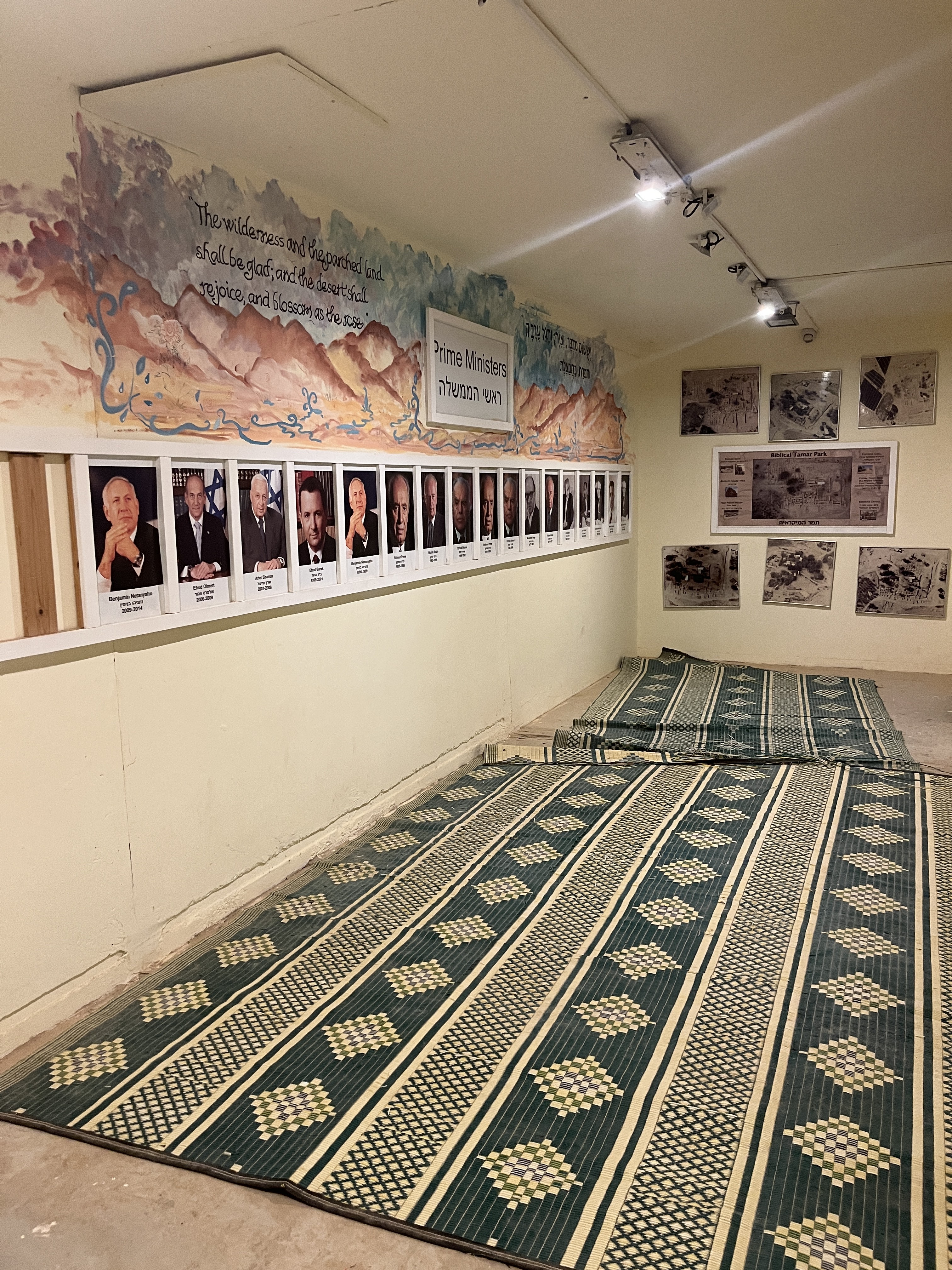
Anyway, you can go into the police station and the underground bunker. There are photos on the walls of all of the Prime Ministers and Presidents in the bunkers, and the police station has photos and information of important Israelis and others who aided in the rebirth of Israel in the Land.

I love how light glows through the open back door of the bunker in the photo above!


Wow, what an amazing history in this place!

One more thing to feature in this blog, because it's pretty cool. According to BibleWalks*, this is the oldest tree in all of Israel. Wow! It is somewhere between 1500-2000 years old, and has survived this long because of the spring of En Hazeva! Wow! I saw the tree, but in photos it looked like a mess (and I didn't see a sign near it), so I am posting their picture below:

This tree would have been there during the Roman era! Wow!

I definitely recommend visiting Tamar park if you get a chance. It's beautiful, and it's free to walk explore the archeological park.


*I didn't have a tour and the only brochure I saw was in Hebrew, so all the information I learned about Tamar Park is from Bible Walks.

Monday, October 24, 2022

The last thing I expected to see at Caesarea Philippi

Caesarea Philippi is known for being the place in Matthew 16 where Peter says to Jesus, "You are the Christ (Messiah), the Son of the Living God".

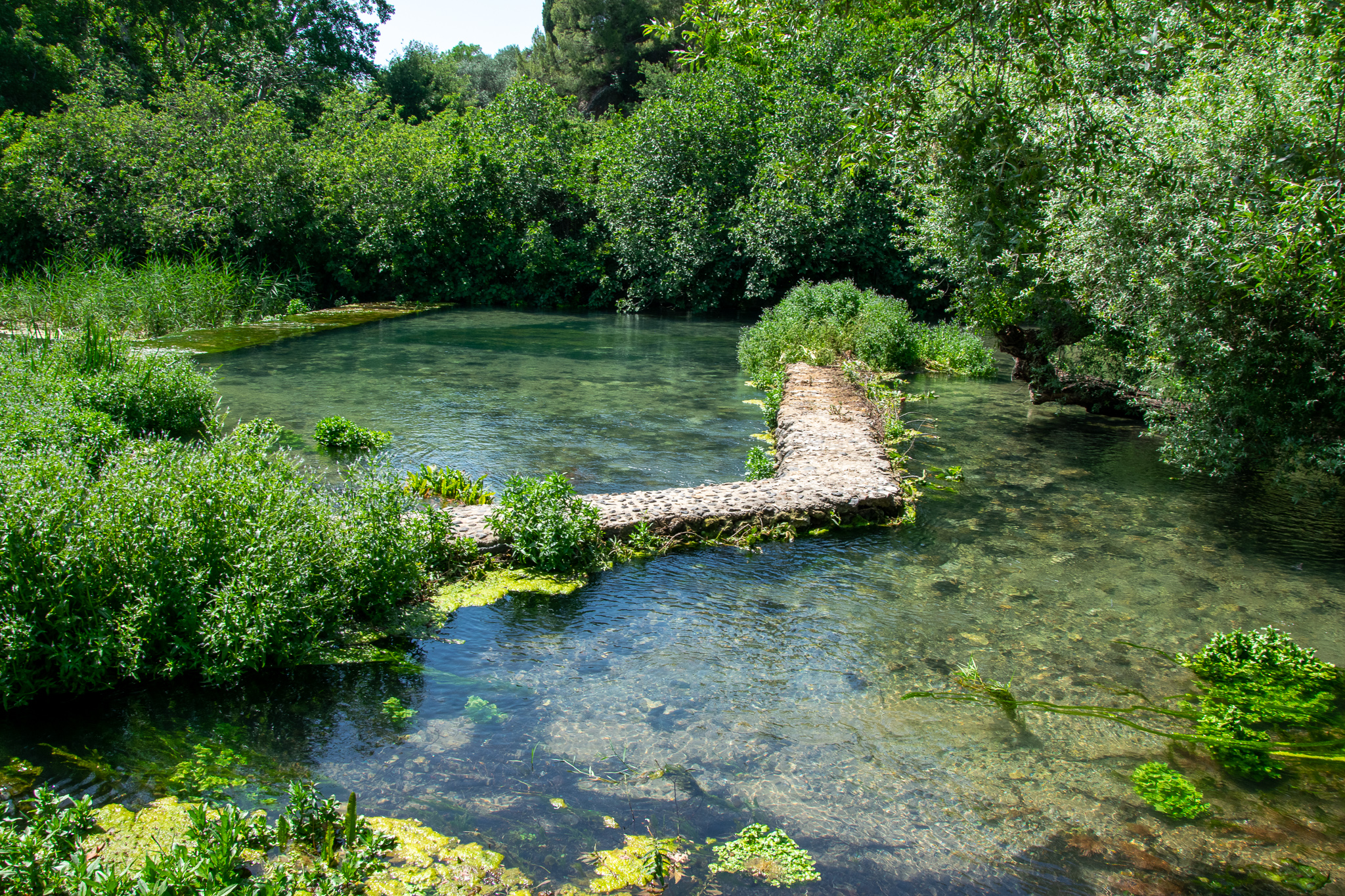
In this region is this mountain and cave where the headwaters of the Hermon Stream (from Mount Hermon) flow out of the ground and form part of the headwaters of the Jordan River. 


What I learned on this visit there, that differs from my tour in 2017, is that while Peter said this to Jesus in this area, it's unlikely he said it right here at this cave. 

Why?

Because it's a place of pagan idolatry, and Jews would not have gone there. Jesus didn't need to—everyone know about this place, this rock. His play on words, "Upon this rock I will build my church" still makes sense whether or not Jesus was standing there. 

While today the cave is closed up (though still deep), back in the day, this is where the water flowed from—just like the spring where Gideon's men drank. It's was so deep they couldn't find the bottom, and it was believed that this was the gate to the underworld.

Next to this cave were temples to the pagan god Pan. People worshipped here, did vile acts, and sacrifices were made in this stream. This site says that children were thrown in; we know for a fact that goats were too. If the goats sank, then the sacrifice was accepted.

In 749 AD, the same earthquake that destroyed Beit She'an, Susita, and so many other places in Israel, also destroyed this place. At that point, the cave was closed in and the springs found a place farther south to stream from the rock.

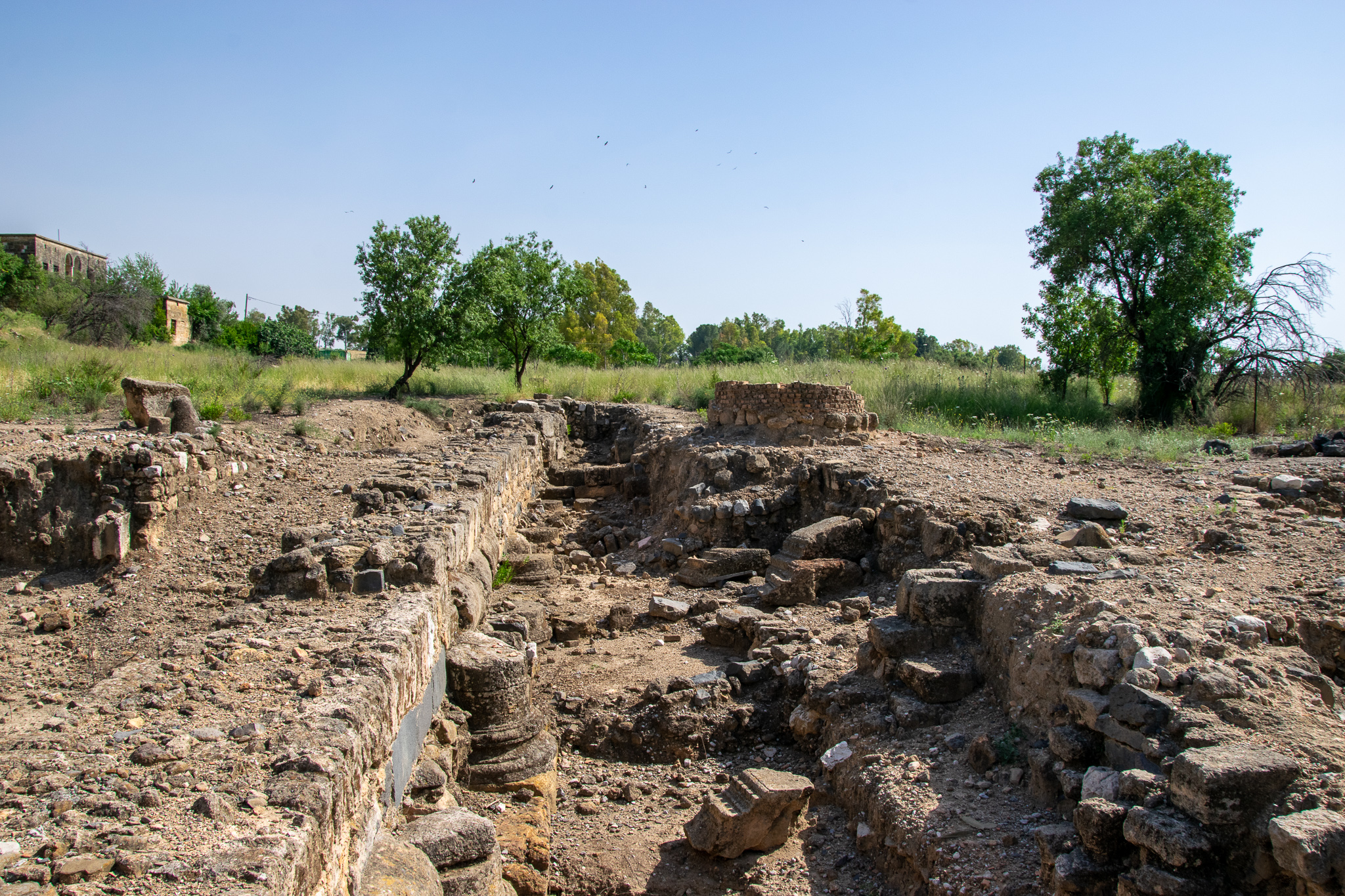
The last time I visited this site, this is basically all I saw, along with more statues/pillars. So I was unprepared for the latest excavations:

It turns out that Augustus Caesar gave this town to Herod, who turned around and built a marble temple for Caesar in front of the cave. About 5 centuries later, a church was built right over those ruins.


Something that is very common in Israel that is that any place where it's documented that Jesus said or did something, the Catholic, Greek Orthodox, or another liturgical church came later and built a church there. So, I guess it shouldn't be that surprising—but I was only here 5 years ago and those ruins had not been excavated then! So that definitely shocked me.

It's also surprising to me, to see a church here at a place of pagan worship, even if Jesus did say that statement nearby (or right there). But, there you go... can't argue with proven fact. 

What do you think of this?

There's more to Caesarea Philippi than I thought!

The second thing I didn't expect to see at Caesarea Philippi was King Agrippa II's palace and an ancient city.


The walk there was gorgeous. We followed Hermon Stream from the grotto into the woods, and this North Ga girl's heart was soooooo happy! Forests, streams, and waterfalls—yes please!


Along the way, we passed some modern ruins, like a mill and a hydro-electric station. I was so thankful for the shade, the cold water to splash on my face, and excited for what we would discover. I've basically realized that pretty much any place you go on a tour, you've probably only seen a piece of the entire park. There just isn't enough time to see it all. So this was completely brand new to me!

Then, there we were: Agrippa's palace


He had a very sophisticated sewage system for his day.


The palace ruins actually span either side of a modern day highway!


And then, outside of the palace, there are ruins from the town, including a basilica (of course) and a synagogue.

High up on the mountain in the distance is Nimrod Fortress!


Inside the synagogue:

As we left this area of ruins and walked around the corner, we found the cardo (main street), which tells us this was a very big town. Now it's a nature reserve with ruins, but that's only what we can see. There's so much more underneath the surface (as always!).


At the end of the path, as we walked to the parking lot, we saw this building, another excellent example of how Israel builds on top of the old.

The sign explains how below this building and on the building itself are building materials dating back millennia. You can literally see the passage of time and the modernization of tools and resources as your eyes move towards the roof!

Wow, there was so much more to this park than I realized! I can't wait to go back and explore more... somewhere in the forest is a waterfall!

Monday, September 5, 2022

Beit She'an: Trapped in Time

Beit She’an is one of those places that I knew was cool when I visited in 2017, but was unable to fully grasp just how incredible it was. I think I was on overload at the time.

So when I went back, I got to be amazed all over again!


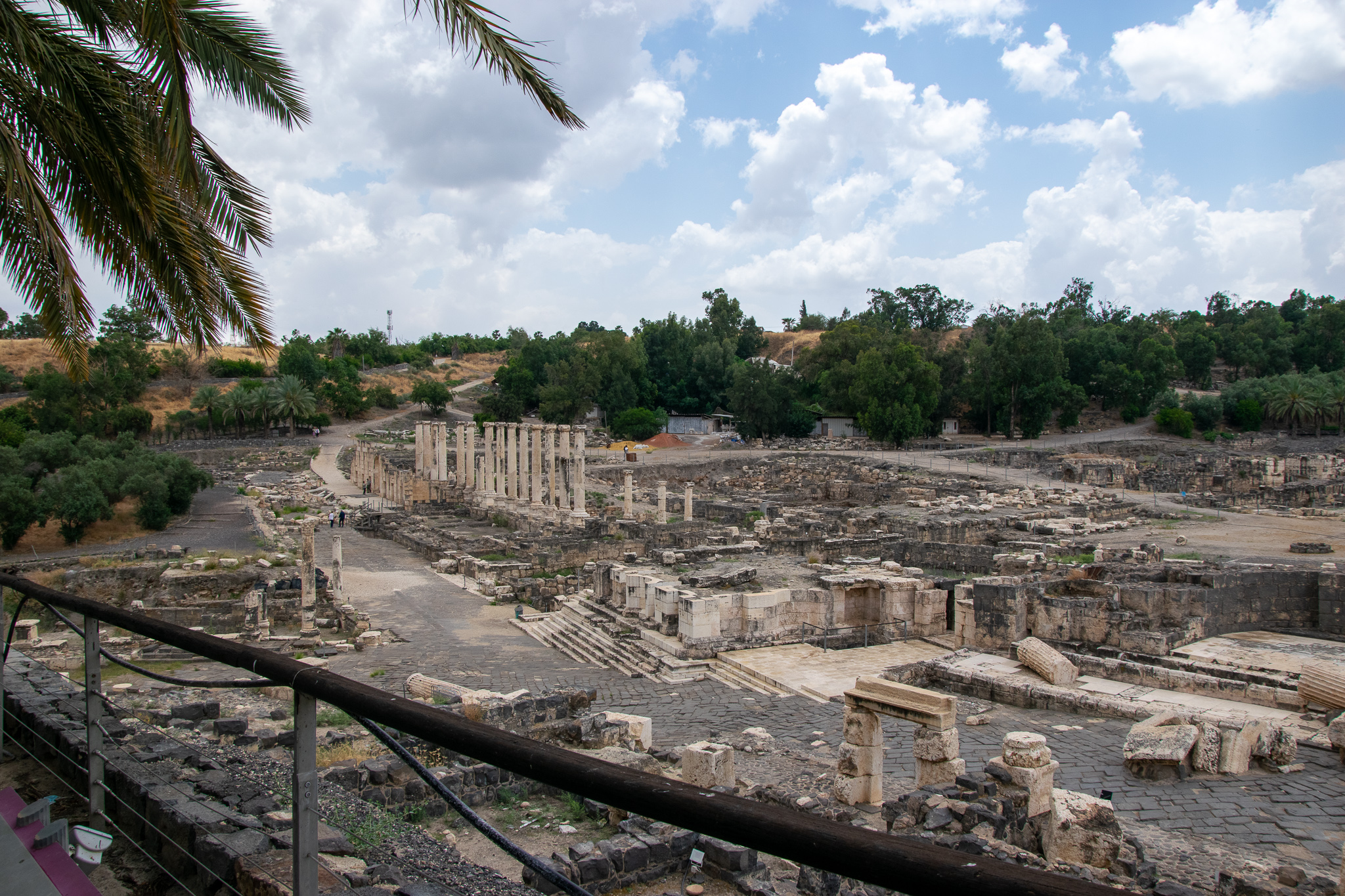
One of the 2 cities of the Decapolis as mentioned in the NT that is in Israel (the other being Susita in the Galilee), Beit She’an was a thriving Roman city during Jesus’ day. It was built at the foot of a tel dating back millennia- the same place where the Philistines hung the headless bodies of King Saul and his sons over the walls (1 Samuel 31:8-13). From a theater to a bathhouse and public toilets, this place had it all.

The bathhouse:


View from the main street (cardo):

The cardo, or the main street going through the center of town:


The statues here show at least 1 thing this city was known for...


Until 749 AD, when a massive earthquake shook the entire region- the largest in recorded history. All this splendor fell down and cracked open, stately columns rolling this way and that until they finally stopped laid in testament to the tectonic game of pick-up sticks the earth played on that fateful day. When the city was found and excavated, coins dating to 749 AD were found, marking the exact date of destruction almost as well as a stopped clock.


These columns are massive... grown men can't wrap their arms around them.


Once again, I went up to the top of the tel. The view was stunning!


On a clear day, you can see all the way into Jordan from the other side:


At the top of the tel lie more ruins, this time of the Philistine village. But, they dug deeper and even found the governor’s house from when the Egyptians controlled the area! That’s MILENNIA ago!


WOW! If you ever get a chance to visit Beit She'an, I highly recommend it! The magnitude of it is overwhelming.